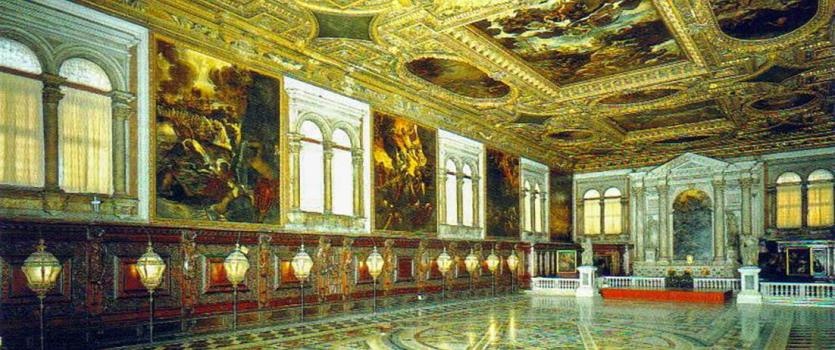
If you do it for too long, you’ll develop a crick in your neck. But it’s worth it. Over the centuries, enviable artists have created masterpieces above you. You can easily spend a lot of time with your head thrown back, staring up at unbelievably beautiful, architecturally striking, often brilliantly colorful, sometimes highly dramatic, and occasionally cleverly deceptive ceilings. These are my favorites.
#1 Palazzo Barberini (Rome, Italy)
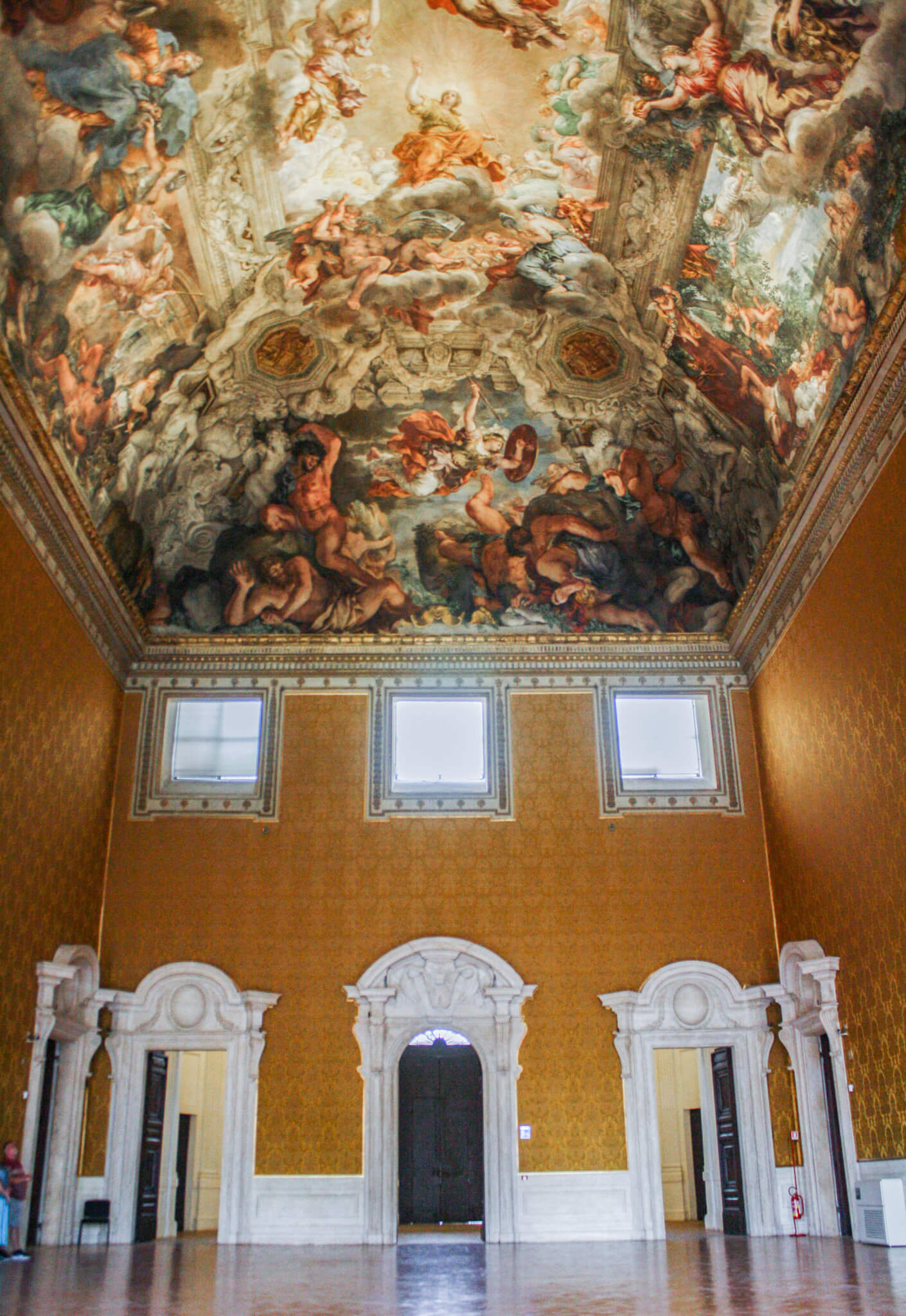 I was enjoying my visit to the wonderfully uncrowded National Gallery of Antique Art in Rome, housed in the Barberini Palace, which was built in 1633 for the Barberini family, including Pope Urban VIII. It’s loaded with some wonderful paintings of Biblical events not usually portrayed, like the parable of the good Samaritan before the Samaritan showed up, doubting Thomas, and Adam and Eve mourning the dead Abel, as well as a couple of brilliant paintings by Caravaggio. When I stepped into a huge unfurnished salon (around the size of about six of my apartments), I knew I had stumbled upon the gallery’s most astounding treasure. Above me, the massive, mind-blowing Baroque fresco The Allegory of Divine Providence and Barberini Power covers the ceiling, measuring just over 4,300 square feet. You really need to sit down on one of only two benches in the entire room to stare and gape at it for a while. The Italian painter Pietro da Cortona finished this masterpiece of illusionism in 1639. The work is divided into five sections through a fake marble frame. The central panel depicts the personification of Providence with a scepter and a golden cape, flanked by Beauty, Justice, Piety, Purity, and Truth. Immortality is there, too, bearing a celestial crown destined for the Barberini coat of arms with its three huge bees placed inside a laurel wreath, symbol of triumph. Religion carries the Vatican keys, and the goddess Rome holds a tiara, symbol of papal temporal power. It all combines to suggest the Barberini papal election (rumored to have been rigged) as divine providence. Once I drank all that in (and that took a while), I circled the room, examining the four sections around the central panel. Dozens of figures cavort across the massive space, some breaking through the “frame” and projecting themselves onto an open and continuous space. You’ll find men laboring in a forge, zaftig women in flowing robes, and a peaceful, almost bacchanal scene in a forest. Not only is this my favorite ceiling in the world, but it’s also one of the best pieces of art in Rome.
#2 Church of St. Ignatius of Loyola at Campus Martius (Chiesa di Sant’Ignazio di Loyola in Campo Marzio, Rome, Italy)
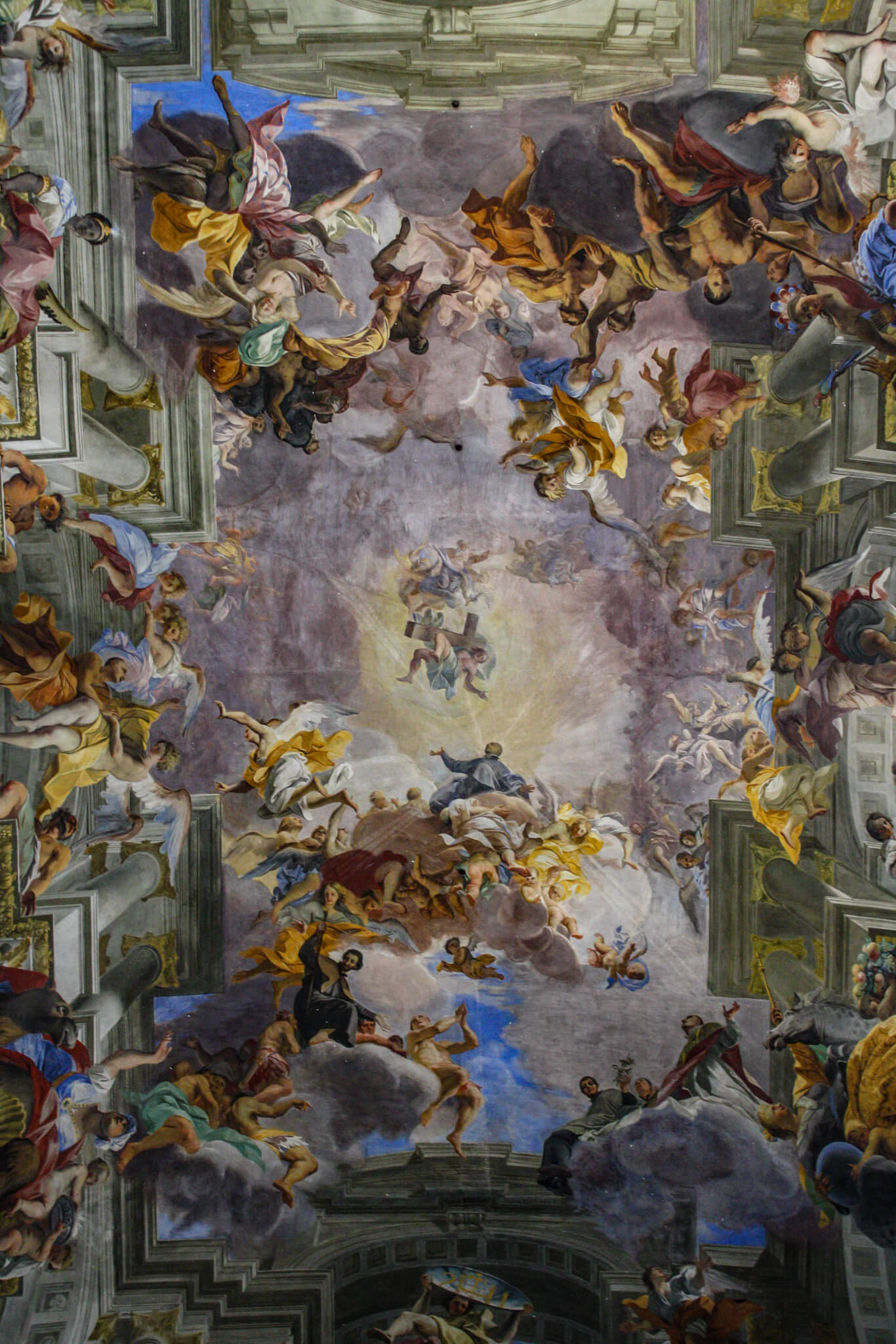 Anchoring the Piazza Sant’Ignazio, the Church of St. Ignatius was intended to replace an existing church serving as the chapel of the adjacent Roman College. When the church was no longer large enough to accommodate the growing number of students, Pope Gregory XV, who had just canonized Ignatius in 1622, suggested to his nephew, Cardinal Ludovisi, to build a new one. The result is a glorious Baroque-style church with a façade ornamented by volutes, pointed and curved window pediments, and empty niches. The church is laid out in a Latin cross plan and features Corinthian pilasters that ring the entire interior, animated stucco figural reliefs, colored marbles, and extensive gilding. Despite all this remarkable splendor, I still hadn’t seen the best parts of the church—until I looked up at one of the most beautiful and deceptive trompe l’oeil ceilings in Rome. This alone is why artist Andrea Pozzo should be a household name. An unparalleled fresco that covers the entire ceiling of the nave celebrates the life of St. Ignatius and the work of the Society of Jesus that he founded. I stood on a marble disk strategically placed to fully appreciate the power of Pozzo’s genius. Painted above me, fake architectural elements such as columns and arches and an enormous cupola open to a bright sky, filled with upward floating figures and clouds spilling out of the “frame” of the barrel vault ceiling, as if the church had no roof at all. The focal point is Ignatius being welcomed into Paradise by Christ and Mary, accompanied by angels and surrounded by allegorical representations of the four continents where the society’s mission had spread. The trigram of the IHS of Christ (the society’s logo) appears on Ignatius’ shield, representing the divine recognition of his work. St. Francis Xavier is also in attendance as he guides the souls of those converted in Asia to heaven. And if that wasn’t enough to bowl me over, a second marker on the floor at the crossing of the nave and transepts provides the perfect vantage point to view another Pozzo trompe l’oeil masterpiece. When funds to build a dome for the church proved insufficient, Pozzo was commissioned to provide the solution. The perspectival projection of a cupola of a tall, ribbed, coffered dome is a paradigm of illusory art. No matter how long I stared at it, I found it impossible to believe that it was just a painting on a flat canvas. This unforgettable ceiling is one of the major reasons why I think St. Ignatius of Loyola is the most beautiful church in Rome.
#3 Sistine Chapel (Vatican Museums, Vatican City)
 When I was first here in 1985, it was closed for restorations. I knew that I’d have to come back, and, eventually, I did. I also knew what I’d be dealing with—a handful of rules (no talking, no photography, no filming) and an almost unbearable concentration of tourists. After roaming the Vatican Museums along its one-way route for several hours, I arrived at the room housing what is probably the most famous ceiling in the world. No matter how many times you’ve seen pictures or images of it, nothing prepares you for this masterpiece (or for the 2,000 people packed in the room with you, like a Tokyo subway car during rush hour). Michelangelo’s ceiling in the Sistine Chapel took the artist about four years to complete, in 1512, while he was standing (not lying down) on a scaffold that he himself constructed and while he was still only in his thirties. He used bright colors, easily visible from the floor 66’ below, to create one gigantic Bible story, spread over an area measuring about 125’ long and more than 40’ wide. Using real and fake architectural elements like pendentives, spandrels, and lunettes to frame his frescoes, Michelangelo created such scenes as David slaying Goliath and Judith slaying Holofernes. He painted the ancestors of Christ on the lowest part of the ceiling. The middle section features male and female prophets. The highest section is the most dramatic, with nine stories from the Book of Genesis. Here, you’ll find Creation of the Sun and Moon; The Flood; The Fall and Expulsion, with a shamed Adam and Eve fleeing the Garden of Eden; and, of course, one of the most recognizable works in the history of art, The Creation of Adam, in which a white-bearded God, in a pinkish robe, creates a beefy Adam with surprisingly fine features. Look closely: God’s index finger is less than one inch from Adam’s, suggesting that no human could ever attain divine perfection. Look closely again: God’s other arm is draped around the shoulders of Eve, who is created in the adjacent panel. Altogether, there are more than 300 figures above you. To see this extraordinary achievement, plan ahead: Dust inadvertently carried inside and the perspiration and carbon dioxide generated by the throngs pose a major risk to the frescoes, so the Vatican has restricted the number of visitors to the chapel to six million per year—that’s still a generous number, but you certainly don’t want to be number 6,000,001 and miss the resounding triumph of High Renaissance art.
#4 Bath Abbey (Bath, England)
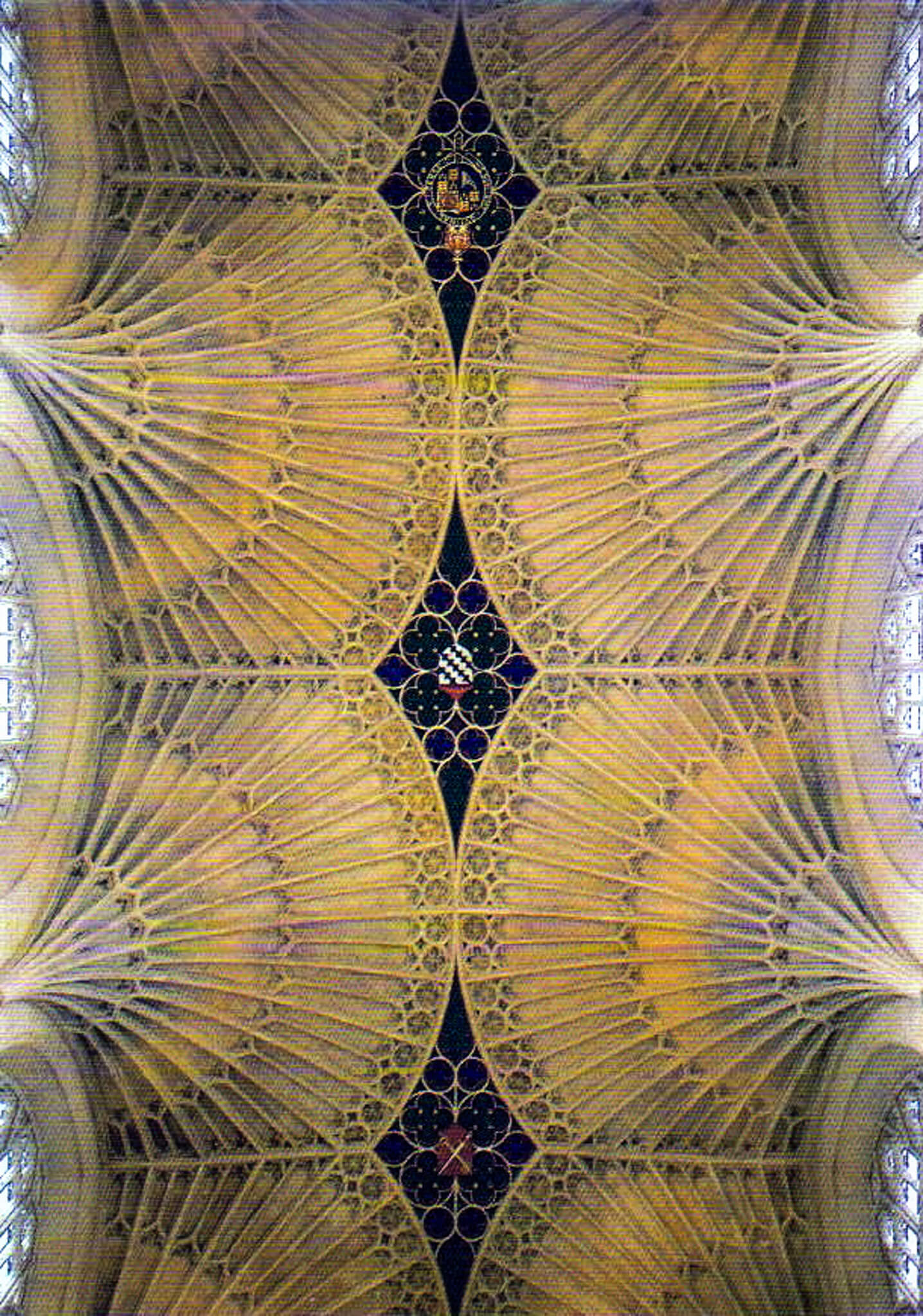 A day trip from London brought me to Bath, where I headed directly from the ancient Roman baths to Bath Abbey. After a century of construction, the abbey (technically the Abbey Church of Saint Peter and Saint Paul) was completed in 1611. It’s easy to see why it took so long—it’s positively gorgeous, dripping in details that will make you swoon. I particularly appreciated one of the elements of the façade—a dozen angels climbing stone Jacob’s Ladders on either side of the enormous stained-glass window above the entrance, 11 of them headed upward, and one on his way down. Inside, the soaring stained-glass windows are spectacular, and they’ll lead your eyes way up to an incomparable ceiling. A masterpiece of stone fan vaulting, this ceiling provides structural stability to the building by distributing the weight of the roof down ribs that then transfer the force into the supporting columns via flying buttresses. That’s a lot of weight to distribute, but it does it so delicately, so finely, so full of laciness and uniformity, that you’ll forget all about its utilitarianism and just be awed by its decorative details.
#5 Church of St. Alvise (Chiesa di Sant’Alvise, Venice, Italy)
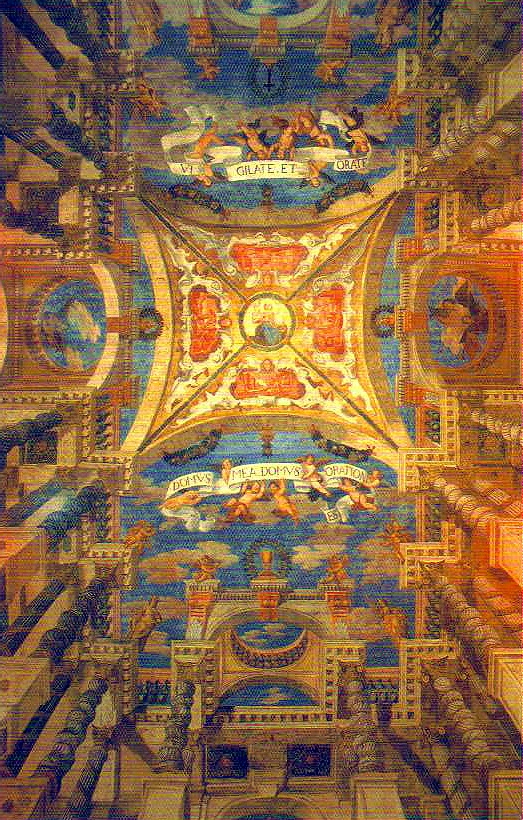 The Church of St. Alvise is one of those Venetian churches that you have to seek out. It’s not like St. Mark’s Basilica (on everybody’s list), and it’s not one of the churches you’ll happen to pass along the way to another key site in the Queen of the Adriatic. Rather, you’ll have to make your way to the very northern end of the city’s islands, in the Cannaregio sestiere, or district. And there is where you’ll find St. Alvise, one of the most beautiful churches in Venice, and certainly among one of its least visited. In fact, when I visited, I was the only person there. I walked through its sunbathed campo and approached the unadorned brick building. It’s not a particularly arresting building to look at, but I was intrigued by its origins—it was commissioned in 1388 in honor of St. Louis by a noblewoman to whom the saint appeared in a dream. I entered and quickly took note of Venice’s first hanging choir, added in the 15th century to accommodate the nuns from the adjacent convent, who would remain unseen behind the grill for the entire service. For the main attraction, I emerged from under the choir, looked up, and was floored by the ceiling. The colorful trompe l’oeil fresco, measuring more than 6,400 square feet, was added to the church around 1674. It’s a busy but not overworked scene, titled Heavenly Jerusalem. Arches, columns, eaves, and oculi reach up to golden statues and innocuous clouds against a blue sky. Cheerful cherubim hold up two banners in Latin, one translated as “My house is the house of prayer,” and the other as “Watch and pray.” In the center, God is surrounded by four scenes, one for each of the four evangelists. Although your eyes are telling you this work is structural, a 3D work that elevates the ceiling, it’s not. It’s completely flat—a technique called quadratura—and it’s one of the most magnificent optical illusions in all of Venice.
Five Runners-Up
- Scuola Grande di San Rocco (Venice, Italy)
- Pisa Cathedral (Pisa, Italy)
- Cathedral Basilica of St. Louis (St. Louis, Missouri)
- Cathedral of St. Nicholas (Ljubljana, Slovenia)
- St. Fin Barre’s Cathedral (Cork, Ireland)
Leave a Comment
Have you been here? Have I inspired you to go? Let me know!


